
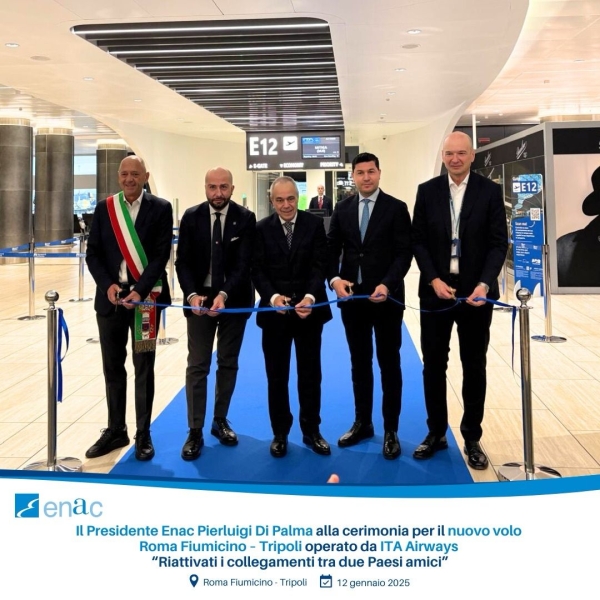
The Italian carrier ITA is the first EU airline to resume flights from Rome to Tripoli after more than a decade. This service will help to boost the commercial relationships between the EU and Libya.
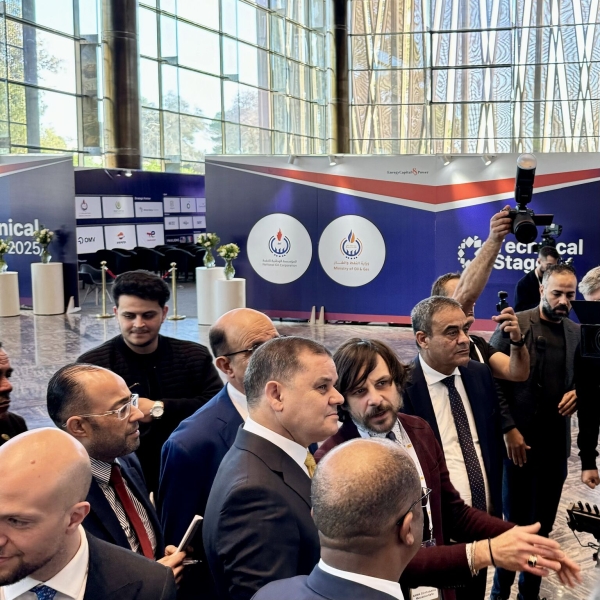
There couldn’t have been a better start to 2025 here in hashtag#Tripoli on the first day of Libya Energy & Economic Summit 2025.
CONFINDUSTRIA ANIMA joined the event with 7 Italian companies directly interested in the oil&gas sector. The ribbon cutting has involved PM Dbeibah.
The next event of such interest will be Libya Build in May.
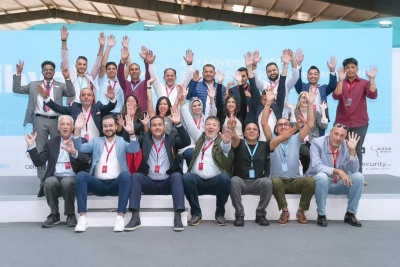
Personally speaking, I have no idea how many fairs I have attended or taken part in my professional life, but, events in Libya always give you an adrenaline effect. I had to recover for three days at home after we declared the game over at Libya Build Benghazi last week. With Pharma Libya and Restaurant and Food Show I think I saw go around between 13.000 to 20.000 people moving inside the new Sid Faraj Convention Center.
I have no idea how many hands I have shaken doing business at the Blend Plants booth or meeting people at the Italian Libyan Chamber of Commerce Rome/Italian Embassy booth. Blend Plants was part of the Italian Pavilion and I suppose all came back with positive feedback. One Italian company is very close to signing a billion euro contract for a strategic plant.
But, It was an amazing experience to sit at the ILCC/Embassy booth for a while, where I had the chance to display the Italian flag. I have no idea how many people passed, looked at me, saw the flag, saw the ILCC Logo on the walls, looked at me again...and in a very polite and sometimes shy way asked: What do you do?
It might be considered a very stupid question if you come to a country just to sell...like the Chinese. In this question, there is all the curiosity of a country, people, entrepreneurs, businessmen, men and women, and new generations, to know and grow. You come to the fair, and this is a concept that I made a sort of mantra in my profession, to get knowledge, new technologies, to meet people that can help to close the gap between my experience and theirs. To digest new ideas that can help me and my family and company to have a better life.
And you understand that your country, Italy can do a lot. One of the last meetings was with two ladies, a professor and the principal of a private school in Benghazi. They were there at Libya Build,(construction sector) to talk with someone from Italy, about their Montessori teaching method. And they found the answer. Through President Colicchi we found an Italian school in Italy eager to start cooperating with the Benghazi school.
This is because Libya Build is considered a sort of Piazza di Spagna for Libya. Thanks, Paolo Biglieri for giving me the chance to be there.Thanks to Firas, Maged, and Giuseppe for their professional support during the event.Thanks to Nicola Colicchi, Luigi D'Aprea, console De Luigi, and last but not least, to H.E. Alberini for his two-day visit that gave a very high profile to the Italian Pavilion a few days later the Italian Libyan Forum in Tripoli.
SEE YOU IN TRIPOLI ON MAY 12th-15 2025 FOR LIBYA BUILD TRIPOLI!!!
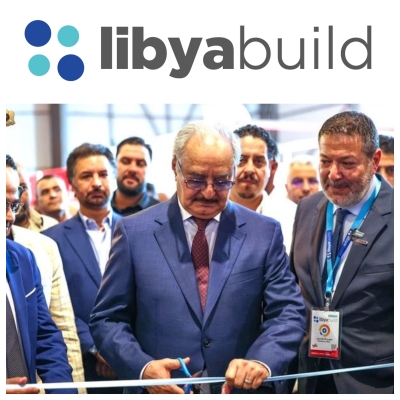
In the first decade of November Benghazi will be the stakeholder for fair events in Libya. Three major events Libya Build, Pharma Libya, and Food &Restaurant Show will be opened by F.M Khalifa Haftar on 4th Nov.2024 at 5 p.m.
A new Expo compound in Sidi Faraj St. will host the events with more than 300 international and local companies. The commercial marketing of Atex International and its partner Alwasl Event has reached the sold-out total available space. Benghazi, once again, proves to be a place of interest for the international community for its current and future projects.
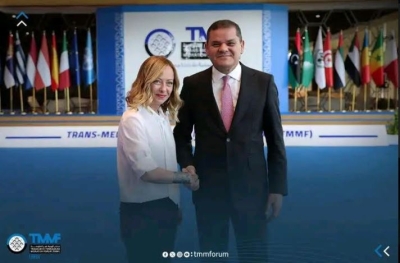
Italian Prime Minister Giorgia Meloni was for the second time in 2024 in Tripoli. During TMMF at Rixos Hotel, she announced the Libyan Italian Forum in October/November 2024.
A good chance for the Italian companies to meet the Libya counterparts. We hope and wish the official date will match the fair events in Benghazi on Nov.4th-7th.
Libya Build Benghazi-Pharma Libya-Food &Restaurant Show will be held at the Fair playground inside the Benina Airport
LIBYA HAS IT ALL, CAN’T THEY SEE IT… WHAT DO I NEED TO DO TO GET THE INTERNATIONAL COMMUNITY TO INVEST? – From a Libyan Perspective)
Mastering commercial competence, especially in the realm of international negotiations, is influenced by natural talent, educational foundation, direct involvement, and the intricacies of the specific industry engaged.
Those who have pursued formal business studies often find that their academic knowledge lays a solid groundwork for understanding commercial dynamics. However, it is the rich tapestry of practical, hands-on experience that hones skills. The depth and complexity of the chosen sector undoubtedly shape’s the learning curve. Intricate industries demand more in-depth knowledge and can extend the path to proficiency.
Mentorship, staying abreast of global market trends, building professional networks, and embracing both successes and setbacks as learning opportunities, can significantly fast-track growth. In the ever-evolving tapestry of commerce, adaptability and a commitment to lifelong learning stand as the pillars of success.
It is not uncommon for driven individuals to cultivate a robust commercial acumen within just a few years of deep, engaged experience in a dynamic business setting. Others may find the journey longer, yet equally rewarding. The pursuit of commercial savvy is indeed an enduring endeavour, rich with continual growth and development.
In Libya, the journey towards commercial maturity comes with unique challenges: transitioning from historical practices not aligned with the global commercial framework, navigating misperceptions in the international business arena, overcoming logistical constraints, and the need for a clear, transformative economic strategy. Nonetheless, Libya remains a land of untapped potential and a true commercial frontier.
The local business community doesn’t just have a role to play; it has the opportunity to reshape understandings and align with global systems that have proven effective. By embracing these structures, Libya can pave the way for a new chapter of economic integration and prosperity. The process may be complex, but the potential for reward is vast, promising a future where Libya stands as an example of commercial success.
INVESTMENT IS CRITICAL TO THIS…
THE IMPORTANCE OF ENGAGING AND ENTICING INVESTORS TO ENTER THE LIBYAN MARKET.
The Libyan market stands on the cusp of a transformative era where engaging international investors is more than an economic initiative – it’s a strategic move towards lasting prosperity and global market integration. Attracting investment to Libya goes beyond infusing capital; it’s about unlocking the nation’s latent potential and propelling it onto the global economic stage.
Libya should be beckoning investors with the promise of lucrative returns. The lure of high-growth prospects is not limited to the energy sector. Infrastructure, telecommunications, and agriculture also await foreign direct investments. Such an infusion of capital and confidence can diversify the economy beyond its traditional reliance on oil, fostering resilience and stability.
The impact of investment on job creation is significant. It’s an engine for employment, offering the Libyan youth avenues for career development and skill acquisition. This, in turn, cultivates a workforce adept and ready to contribute to the nation’s growth trajectory. Moreover, investors often introduce cutting-edge technologies and innovative practices that can leapfrog sectors into new levels of productivity and efficiency.
Investments are also the building blocks for critical infrastructure, without which an economy cannot thrive. Roads, telecommunications networks, and energy grids form the backbone of a vibrant economic landscape, one that can support business activities and improve the quality of life for all Libyans.
Drawing in foreign investors has the added benefit of strengthening Libya’s international ties. It’s a gateway to enhanced diplomatic relations and economic partnerships, paving the way for Libya to weave itself into the fabric of the global economy. This integration can herald stability and present Libya as a collaborative player on the international stage.
To entice investors, Libya must cultivate a business environment that offers stability and security. Transparent governance, a fair legal system, and investor protections are paramount in building the trust needed to attract and retain foreign investment. It’s about convincing investors that Libya is not just a place to invest, but a place where their investments will grow and thrive.
The presence of foreign investors also stirs competition, spurring innovation and efficiency among local businesses. This healthy competitive climate ensures that consumers enjoy superior products and services, enhancing the market’s dynamism.
In essence, the call to attract investors to Libya is a call to economic rejuvenation. It is an essential step towards a future where Libya can claim economic success and offer its citizens the benefits of a thriving, diverse, and integrated economy. But Libya has to do more, having natural assets, ideas, a young population and determination is not enough, Libya needs to convince International investors as to why they should come to Libya, it has to be a win-win position where both sides contribute and invest.
As a renowned investor once remarked, “Returns matter a lot—it’s our capital!”
LIBYA HAS GREAT ASSETS AND HUGE COMMERCIAL OPPORTUNITY. WHY CAN’T THE INTERNATIONAL COMMUNITY SEE THAT?
Libya’s considerable assets and commercial promise are acknowledged by many in the international community, yet this recognition is often overshadowed by a host of challenges. Political instability and security concerns loom large, creating an aura of risk that many investors are hesitant to embrace. The lack of a stable, transparent legal framework further complicates matters, leaving businesses guessing about regulations and the security of their investments.
Infrastructural deficits, particularly in non-oil sectors, signal a need for broader economic diversification and development. Meanwhile, issues of corruption and transparency act as deterrents, clouding the country’s true potential. The financial sector’s limitations in supporting business growth and the global misperceptions about Libya’s business environment add to the reluctance.
Moreover, Libya’s own narrative of its commercial prospects needs to be clearer and more compelling. The international community requires reassurance through a unified, strategic vision of economic reform and development that Libya is not only open for business but is actively fostering a secure and profitable climate for investment. With concerted effort to address these multifaceted issues, Libya’s significant opportunities can be brought to the forefront, attracting the investment and partnerships necessary for its economic renaissance.
“It’s not whether you’re right or wrong that’s important, but how much money you make when you’re right and how much you lose when you’re wrong.”
YOU NEED TO INVEST IN YOURSELF SO OTHERS CAN INVEST IN YOU!
In the realm of global commerce, it is very often a fact “it takes money to make money” and for Libyan businesses seeking to attract international investment, this means an initial focus on self-investment. Investing within lays the groundwork for showcasing a business’s potential and stability to the world, serving as a conduit for external funds.
Libyan companies stand at a crossroads where the opportunity for growth is vast, yet realisation of this growth is contingent upon their ability to demonstrate value, sustainability, and scalability to a global audience. This self-investment takes many forms: from enhancing operational efficiencies and adopting cutting-edge technologies to investing in human capital and ensuring robust corporate governance.
By channelling funds into their infrastructure, Libyan businesses can address any existing operational bottlenecks, thereby increasing productivity and positioning themselves as competent and reliable partners in the eyes of international investors. Advancements in technology not only streamline processes but also showcase a willingness to adapt and innovate — qualities that are highly prized on the international stage.
Investing in the workforce is equally crucial. Well-trained, skilled employees reflect a business’s commitment to quality and excellence. Moreover, adherence to best practices in corporate governance, transparency, and ethical dealings reinforces trust, a critical currency in international investment decisions.
For Libya, a country with untapped potential and a desire to diversify its economic portfolio, the impetus for businesses to invest internally cannot be overstated. It is through such self-fortification that Libyan businesses will signal their readiness for the global market, encouraging the international community to invest with confidence. As Libyan businesses flourish from within, they will not only contribute to the national economy but also attract the global investment needed to propel the country to new heights of economic success.
SO HOW DO I PROVE THE POTENTIAL OF THE OPPORTUNITY?
In simple terms – Demonstrate cost, RoI and a proven, validated, professionally produced Business case or feasibility study
It is imperative to justify why the international community should commit funds if local commitment does not! It is about demonstrating confidence and conviction in the project’s viability.
Investors will want to see this so that they can make strategic investments.
At a local level the following steps are essential:
Determine the precise investment requirement to achieve your goal—whether it ranges in the millions or billions.
Clearly identify the targeted sectors or products to attract specialised potential partners.
Offer assurances regarding the operational and commercial viability within Libya, detailing the financial and legal frameworks that underpin such investments.
Detail the physical and financial prerequisites, such as liquidity, profit repatriation, taxation, and expected ROI timelines.
Provide guarantees concerning the security of both human and capital assets involved in the project.
In addition, adherence to internationally recognised investment protocols and processes is paramount. These encompass:
A comprehensive understanding of local laws, investment policies, and regulatory frameworks.
An economic environment characterised by stability, potential for growth, and a supportive financial system.
Assurance of political stability to minimise investment risks associated with policy upheavals.
An in-depth market analysis that underlines consumer trends and potential return on investment.
Facilitated business operations for foreign investors seeking to establish partnerships.
Accessibility to essential resources, including skilled labour, natural resources, and logistical infrastructure.
A clear picture of the corruption landscape and its impact on business operations.
Knowledge of the incentives for foreign investment and any prevailing restrictions.
Currency stability and the assurance of financial repatriation without undue risk.
Cultural intelligence that guides business conduct and relationship-building practices.
Investing abroad demands diligent risk assessment and strategic planning to ensure favourable outcomes.
“If you’re seeking investment in a company, then you ought to be able to explain why in simple language that can be understood, and quickly enough so the investor won’t get bored.”
CONCLUSION
Investment is crucial because it fuels economic growth, creates jobs, drives innovation, and provides the capital necessary for businesses to expand and thrive. It’s the lifeblood of economic development, enabling societies to improve infrastructure, advance technology, and enhance the overall standard of living.
“KNOW WHAT YOU OWN, WHY YOU OWN IT, AND WHAT IT’S WORTH. THEN TELL ME”
JON HANCOCK
CHAIRMAN BRITISH LIBYAN ASSOCIATION
HEREFORD UK
The Head of the Airports Authority, Mohammed Beytelmal, signed a memorandum of understanding (MoU) with the Turkish Terminal Yapi company and the English “ARG International” group to invest in Tripoli Airport.
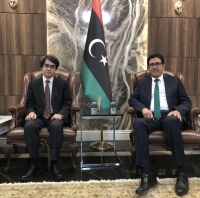
Embassies are reopening in Tripoli. President Al Mnifi in the last two weeks received the new ambassadors of Austria, Mauritania, and Japan.
The new Japanese Ambassador to Libya, Shimmura Izuru, arrived Thursday in Tripoli, after an absence of 10 years since 2014.
Now, we have just to wait for H.E. Jennifer Gavito,the newly appointed U.S. ambassador in Libya.Will we see her at the opening ceremony of Libya Build?
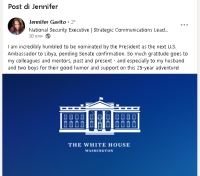
Yesterday, President Joe Biden appointed as the new American ambassador in Libya Mrs. Jennifer Gavito.
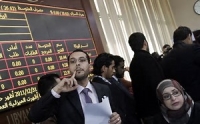
On Monday, Libyan Prime Minister Abdul Hamid Dbeibah held the reopening of trading in the buying and selling of shares for entities listed in the Libyan Stock Market after a nine-year. Another step in the economic stabilization of the country.
The Libyan Stock Market was officially opened in 2006
More...
Libya is back in Rome.It is not a surprise to see how big is the interest of both parties,but,to see 250 businessmen and public institutions talk until 7 pm....
it means Libya and Italy have common interests and not just for business.
The next step will be Libya Food Expo in January 2024 and Libya Build at the end of April.Stay tuned!!!
The picture is related to the press conference released by H.E.ambassador Younes at 6.30 pm.
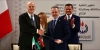
The project will see constructing two new fixed offshore platforms in front of the Mellitah's Complex and subsea pipelines to supply an onshore gas treatment.
760 million cubic feet of gas,42,000 barrels of condensate and 5000 barells of crude oil will be pumped at the beginning of the production in 2026
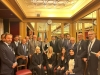
Rome Oct.18th 2023
An interparliamentary group has been established to support the friendly relationship between Libya and Italy. The president of the group is sen. Marco Scurria.
H.E.Ambassador Ahmed Younes and Nicola Colicchi,president of the Italian Libyan Chamber of Commerce in Rome attended the official ceremony.
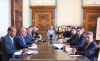
Central Bank of Libya. Digital Transformation an Instant Payment Program.
New services by the end of the year.
Another step ahead for the Libyan Economy.